Location page
- Diner question
- Which venue is near me and how do I get there?
- Keep current
- Address, map, phone, dine-in and pickup hours, accessibility details, photos, and reservation route
A restaurant SEO plan for location pages, accurate menus, reservations and ordering, seasonal updates, and measuring visits beyond search clicks.
Restaurant SEO should help diners choose what to order, where to go, and how to reserve or pick up food. Keep each location's hours, menu, prices, service modes, and booking links current across the site and Google profile. Make location pages useful and measure menu views, calls, bookings, and orders by venue. Structured data doesn't guarantee search features.
Four quick questions, then a straight answer.
From your answers, this is quietly costing you traffic and nobody has the hours to chase it. Scaplet finds every affected page, drafts the fixes and tracks how AI answers mention you.
A data platform shipped 46 fixes without a ticket.
This looks handled. Re-check after a redesign, a migration or a big content push; that is when it breaks.
Your site is small and you have the time. Work through the steps on this page, starting with the pages that get the most traffic.
 AI Mode
If menus differ by location, say so and link the diner to the right one. Put allergy and dietary information through an owner-approved process and avoid promises about cross-contact or suitability unless the kitchen can support them. Update the website, ordering provider, and profile together when a dish or price changes.
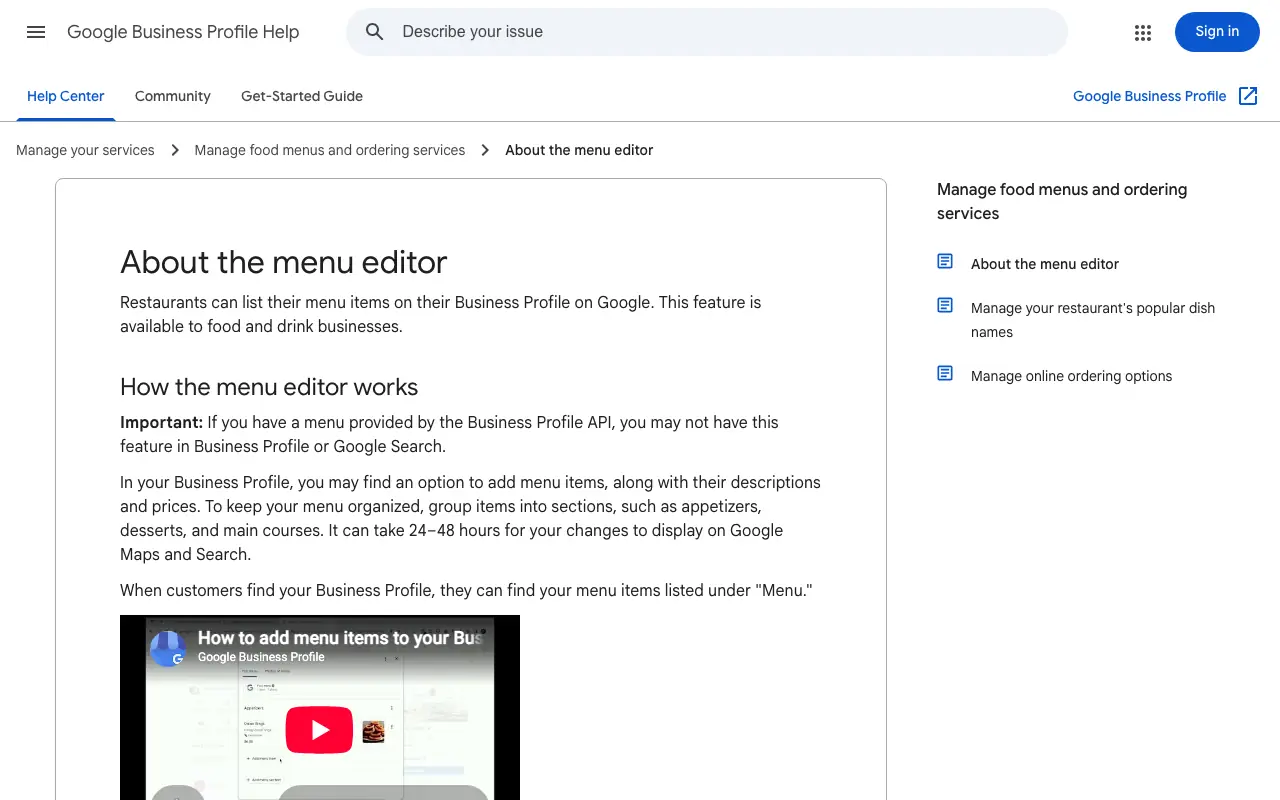
 Google's menu editor help page for food and drink businesses
A page visit is not a booking or an order. Use provider reporting or tracked outbound events to compare reservation starts, completed bookings, order starts, and completed orders. Keep the restaurant's own reporting separate from third-party discovery and ordering referrals.
Read Google's LocalBusiness structured data documentation, including the current access limits, and our JSON-LD explainer.
Google's Search Console performance report shows queries and pages, so pair it with booking and order data. For broader local discovery beyond Google, see AI search for local businesses. Hotel restaurants share the booking-versus-visit problem; see SEO for hotels.
Use Search Console to compare brand, cuisine, neighborhood, and menu queries by location page. Track impressions and clicks across a consistent date range.
Review profile searches, calls, directions, menu interactions, and booking metrics. Separate profile interactions from site visits and provider activity.
Track reservations and orders completed, not just buttons clicked. Attribute third-party referrals where possible and compare cancellations or failed checkouts.
Compare results with covers, order mix, capacity, opening hours, and menu changes. A new page cannot compensate for an unavailable item or incorrect hours.
4 questions people ask next, answered from the sources on this page.
Give each location an accurate page with menu, price, hours, contact, location, and the right reservation or ordering route. Make group or event pages answer a distinct customer need.
Google supports menu sections, items, descriptions, prices, and a menu URL for eligible food and drink businesses. Keep those details aligned with the restaurant's current website and ordering system.
No. Google says the Restaurant carousel is currently limited to a small set of restaurant providers. Structured data must describe visible, accurate information and doesn't guarantee rich-result display.
Track search visibility and profile interactions by location, then connect them to completed bookings and orders. Keep clicks, booking starts, completed transactions, and cancellations distinct.
 google.com
Run the free audit, then approve the fixes. Every change can be undone.
